Why In-Home Medical Care Is Changing the Way Chronic Wounds Are Managed
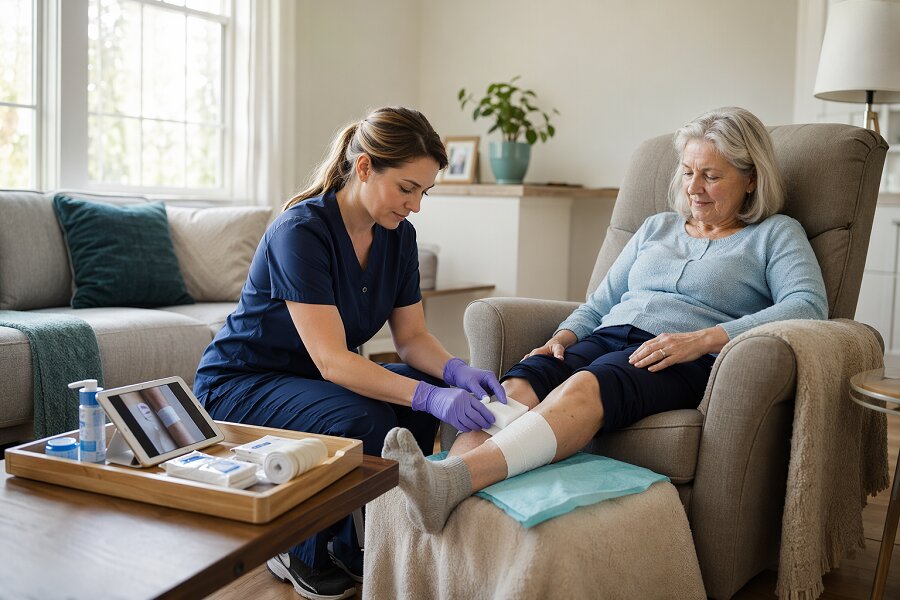
When you’re living with a chronic wound, constant trips to clinics can work against your comfort and progress. In-home medical care shifts expert treatment to your space, where nurses can monitor changes, manage pain, and keep dressings on schedule without disrupting your routine.
You’re not just getting convenience. You’re gaining more consistent care, closer oversight, and better coordination with your doctors. But the biggest change happens in ways you might not expect.
Why Home Wound Care Can Improve Healing
Receiving wound care at home can support healing by reducing physical and emotional strain associated with frequent clinic visits.
Staying at home limits travel-related fatigue, discomfort, and waiting times, and may lower exposure to additional pathogens in healthcare settings.
Home visits also allow clinicians to observe your living conditions directly, which can lead to more practical and appropriate recommendations for wound care routines, equipment placement, and safety measures.
This alignment between medical advice and daily life can improve adherence to care plans, an important factor in wound closure and prevention of complications.
In a familiar environment, many people find it easier to report changes such as increased pain, drainage, or odor.
Timely reporting enables earlier adjustment of dressings, medications, or other interventions, which can help reduce the risk of infection and support more stable, gradual healing.
These advantages are at the core of what mobile wound care is designed to provide. Rather than requiring patients to navigate transportation barriers or endure the demands of repeated outpatient visits, mobile wound care brings skilled clinical assessment and treatment directly to the patient.
This model is particularly beneficial for individuals with limited mobility, complex wound histories, or conditions that make consistent clinic attendance difficult.
What In-Home Wound Care Looks Like Day to Day
Although each care plan is tailored to the individual, in-home wound care usually follows a structured daily routine that integrates medical tasks into everyday activities.
The day often begins with a brief assessment of symptoms, including pain level, the amount and type of drainage, changes in redness or swelling, and any new or unusual odor.
A visiting nurse may come to the home to examine the wound, measure its size and depth, clean the surrounding skin, and apply new dressings while describing the purpose of each step.
Medication use, blood sugar levels (when relevant), and methods to reduce pressure or friction on the wound are typically reviewed.
Between professional visits, the patient or caregiver observes the dressing for leakage or loosening, keeps the area clean and dry as instructed, follows guidance on movement or positioning, and records any noticeable changes.
Consistent documentation and scheduled follow-up appointments allow the care team to adjust the treatment plan as needed and support steady wound healing.
Who Is a Good Fit for Home Wound Care?
Understanding what daily in‑home wound care involves raises an important question: who's most likely to benefit from this type of support? Home wound care can be appropriate for individuals who find travel to a clinic painful, exhausting, or difficult to arrange, such as those who rely on others for transportation or use mobility aids.
It is often well-suited to people with multiple chronic conditions (for example, diabetes or vascular disease), limited mobility, or a history of slow‑healing ulcers. Individuals who experience frequent infections, have had recent hospitalizations related to wounds, or develop recurrent wounds in the same area may also benefit from consistent care at home.
Home wound care can be particularly useful for those who are willing to follow a treatment plan but need professional guidance to do so correctly.
It may also be appropriate for people who live with a caregiver who can assist between visits, or for patients who'd benefit from regular clinical oversight in their usual home environment, where factors affecting wound healing (such as hygiene, equipment, and daily routines) can be directly assessed and addressed.
How Technology Supports Monitoring Wounds at Home
Smart tools are changing how wounds are monitored at home by making it more straightforward to track healing and identify potential problems earlier. Using a smartphone or tablet, you can take regular photos of your wound to document its appearance over time, note changes, and record details such as pain level, drainage, or odor.
This information can help you and your healthcare provider assess whether the wound is improving or if further evaluation is needed.
Specialized wound-care apps can assist you in measuring the wound, logging dressing changes, and setting reminders for cleaning or medication schedules. These features can support more consistent self-care and provide a clearer record of your wound’s progress.
Some advanced wound dressings contain sensors that track factors like moisture or temperature. Changes in these measurements may indicate an increased risk of infection, allowing for earlier intervention when combined with professional assessment.
In addition, secure messaging and photo-sharing with your healthcare team can reduce the need for some in-person visits while still allowing clinicians to monitor the wound between appointments. However, remote tools are intended to complement, not replace, direct medical evaluation when it's required.
How Home Wound Care Teams Work With Your Doctors
When you receive in-home care for a chronic wound, the home wound care team coordinates closely with your physicians to follow a single, consistent treatment plan. They review your medical history, medications, allergies, recent procedures, and relevant lab or imaging results. Based on this information, they implement the physician’s orders for dressing selection, offloading or pressure‑relief methods, infection prevention, and pain management.
The home care clinicians regularly report back to your doctors, typically sharing wound measurements, descriptions of the wound bed and surrounding skin, photographs when appropriate, and any changes in symptoms. If there are signs of problems such as increasing pain, redness, swelling, drainage, odor, or fever, they notify the prescribing clinician promptly so treatment orders can be reassessed or modified.
In addition, the home wound care team reinforces instructions from your specialists, such as guidance on blood sugar control, nutrition, smoking cessation, or activity limits. They review daily care steps with you and your caregivers, check whether you can carry them out safely, and clarify conflicting or unclear directions. This communication helps ensure that recommendations from different providers are consistent and support stable, long‑term wound healing.
How to Choose an In-Home Wound Care Provider
A coordinated care team is effective only if you select an appropriate provider to manage your wound at home.
Begin by verifying that the agency is properly licensed and insured, and that its staff has documented experience with your specific type of wound.
Clarify who'll be visiting you, the frequency of visits, and the process for responding to any sudden changes or complications in your condition.
Determine whether the provider follows evidence-based clinical guidelines, uses photographs or digital tools to monitor wound progress, and communicates updates in a timely manner with your physicians or other members of your healthcare team.
Review objective information such as online ratings and, when possible, request references or testimonials from other patients.
Finally, assess whether the provider listens to your concerns, explains care plans clearly, and maintains a professional, respectful environment.
A working relationship based on clear communication and mutual respect supports safer, more consistent wound healing at home.
Conclusion
In-home wound care lets you heal where you’re most comfortable while staying closely connected to your care team. With regular nurse visits, photo monitoring, and clear communication with your doctors, you’re more likely to catch problems early and stick to your treatment plan. If you’re managing a chronic wound, exploring home-based care could give you better control, fewer trips to the clinic, and a safer path toward lasting healing.